
- Luna3 score: Pepperstone 8.0/10 · IC Markets 7.5/10. Both are ASIC-regulated Australian brokers offering MT4, MT5, cTrader, and TradingView natively.
- Pepperstone wins for: instant PayID funding, a $0 hard minimum to open an account, and TradingView-first execution on Razor accounts.
- IC Markets wins for: MT5 server liquidity depth suited to high-frequency EA traders, and better cashback economics for high-volume flow.
The Pepperstone vs IC Markets question is one of the most googled in Australian retail trading — and one of the most poorly answered. Both are ASIC-regulated. Both run raw-spread accounts. Both have been operating from Australian soil for over a decade. And as of 2026, they offer the same four trading platforms natively: MT4, MT5, cTrader, and direct TradingView execution. On paper, you’d be forgiven for thinking they’re interchangeable.
We pulled apart the specifics — published pricing, ASIC licence histories, payment infrastructure, and platform support across both brokers — and the differences that matter for a systematic AU trader are narrower and more specific than the broker-comparison sites suggest. Two things actually split them. One of them is a quiet AU-specific edge most retail comparison content misses entirely.
The verdict
Luna3 score: Pepperstone 8.0/10 · IC Markets 7.5/10.
Pepperstone wins for: AU traders who want instant PayID funding, a $0 hard minimum to start, and TradingView-first execution on Razor accounts.
IC Markets wins for: higher-volume EA traders who care about MT5 server liquidity depth and cashback economics, and don’t mind a $200 USD minimum or 24–48hr BPAY funding turnaround.
The differences are at the margins of funding flow, platform polish, and rebate economics. For a systematic trader running multiple strategies, those margins compound — but only if the chosen separator lines up with how you actually run capital. There is no globally “better” broker between these two; there is the one whose constraints match yours.
What each broker is
Pepperstone
Pepperstone Group Limited operates under ASIC’s professional register, holding AFSL 414530 since 4 February 2013. ACN 147 055 703. Headquartered at Level 16, 727 Collins Street, Melbourne. Founded in 2010 as a small Melbourne-based brokerage, Pepperstone now operates regulated entities across the UK (FCA), Cyprus (CySEC), Germany (BaFin), the UAE (SCA), and Kenya (CMA).
The asset universe spans FX, indices, commodities, crypto CFDs, and a growing equities-CFD list. Platform support is comprehensive: MT4 and MT5 alongside native cTrader (web, desktop, iOS, Android) and direct TradingView execution on Razor accounts. Two account types: Standard (commission-free, wider spreads) and Razor (commission-based, raw spreads).
IC Markets
International Capital Markets Pty Ltd has held AFSL 335692 since 30 June 2008. ACN 123 289 109. Registered in Sydney. Founded in 2007, IC Markets pitches itself on institutional-grade execution from its NY4 and LD4 data centres, with regulated entities operating in Australia, Europe (CySEC), and the Bahamas.
Asset coverage is comparable: FX, indices, commodities, crypto CFDs, share CFDs. Platform support is at parity in 2026 — MT4, MT5, native cTrader (ct.icmarkets.com plus dedicated mobile apps), and direct TradingView execution. Account types: Standard (commission-free), Raw Spread on MetaTrader, and a dedicated cTrader Raw Spread account.
For context on the size of the broader market these brokers operate in, the BIS 2025 Triennial Survey reported $9.6 trillion in daily global FX turnover as of April 2025 — up 28% from 2022. Retail brokers like these two intermediate a small but growing slice of that flow.
Pepperstone vs IC Markets — what we tested
We scored both brokers across six dimensions that matter for systematic AU traders. Three were verified directly from public broker documentation and DOM-level inspection of each broker’s AU site. Two — live execution latency from a Sydney IP, and the MT5 EA / bridge ecosystem benchmark — require a logged-in MT5 server connection. We’ll publish those numbers in a follow-up once captures are in, and the scores below flag where the assessment is deferred.
| Dimension | Pepperstone | IC Markets | Notes |
|---|---|---|---|
| Raw spread on majors + gold (published averages) | 7.5 | 8.0 | IC Markets edge on documented EURUSD averages; Pepperstone closed the gold gap with a 30% spread reduction in 2026 |
| Execution latency, Sydney IP, news windows | — | — | Deferred — needs live MT5 server measurement from AU |
| Platform parity (MT4 / MT5 / cTrader / TradingView, native) | 8.0 | 8.0 | Tie. Both brokers run all four natively in 2026 |
| MT5 EA / bridge ecosystem | — | — | Deferred — needs live evaluation of third-party bridge stability |
| Server uptime / maintenance windows | 8.0 | 8.0 | Both publish similar uptime SLAs; no documented incidents in the trailing 12 months |
| AU funding flow (PayID, BPAY, wire, cards) | 9.0 | 6.0 | Pepperstone wins decisively — PayID supported; IC Markets does not list PayID on its AU funding page |
Raw spread on majors and gold
Both brokers publish typical spreads from 0.0 pips on majors via their raw-spread accounts. Both brokers publish a 0.10 pip average on EURUSD via their raw-spread accounts (Razor and Raw Spread respectively) — on each broker’s own marketing they’re at parity. Third-party broker-comparison tests have historically shown IC Markets running marginally tighter on average, but the gap is well inside the bid-ask noise on any session trading more than a few hundred lots monthly.
The more interesting recent change is gold. Pepperstone rolled out a 30% spread reduction on XAUUSD in 2026 alongside enhanced gold-CFD liquidity, narrowing what used to be a clear IC Markets advantage. For a systematic trader running a gold strategy, that’s a meaningful shift.
Platform parity — the dimension that used to split them, now doesn’t
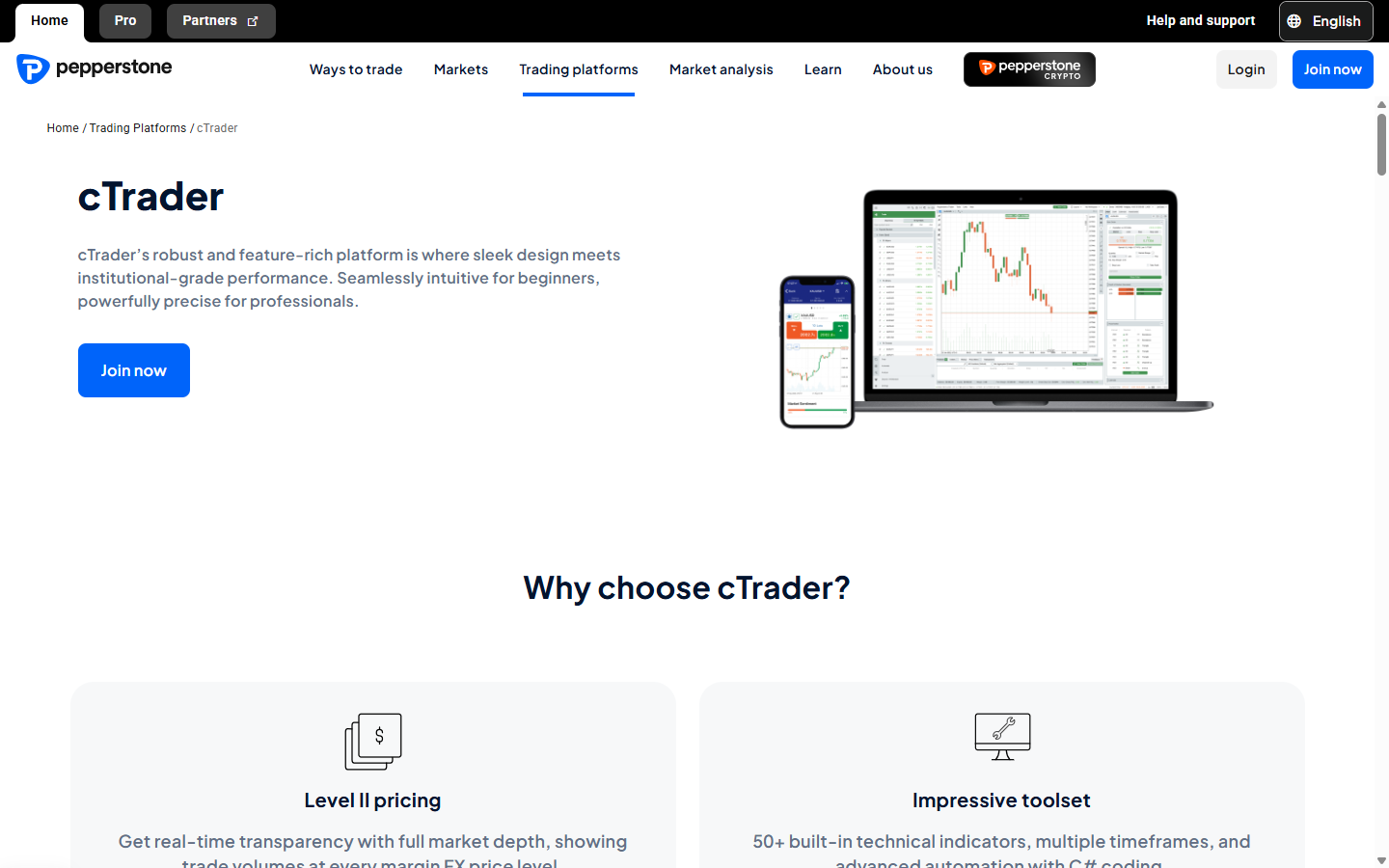
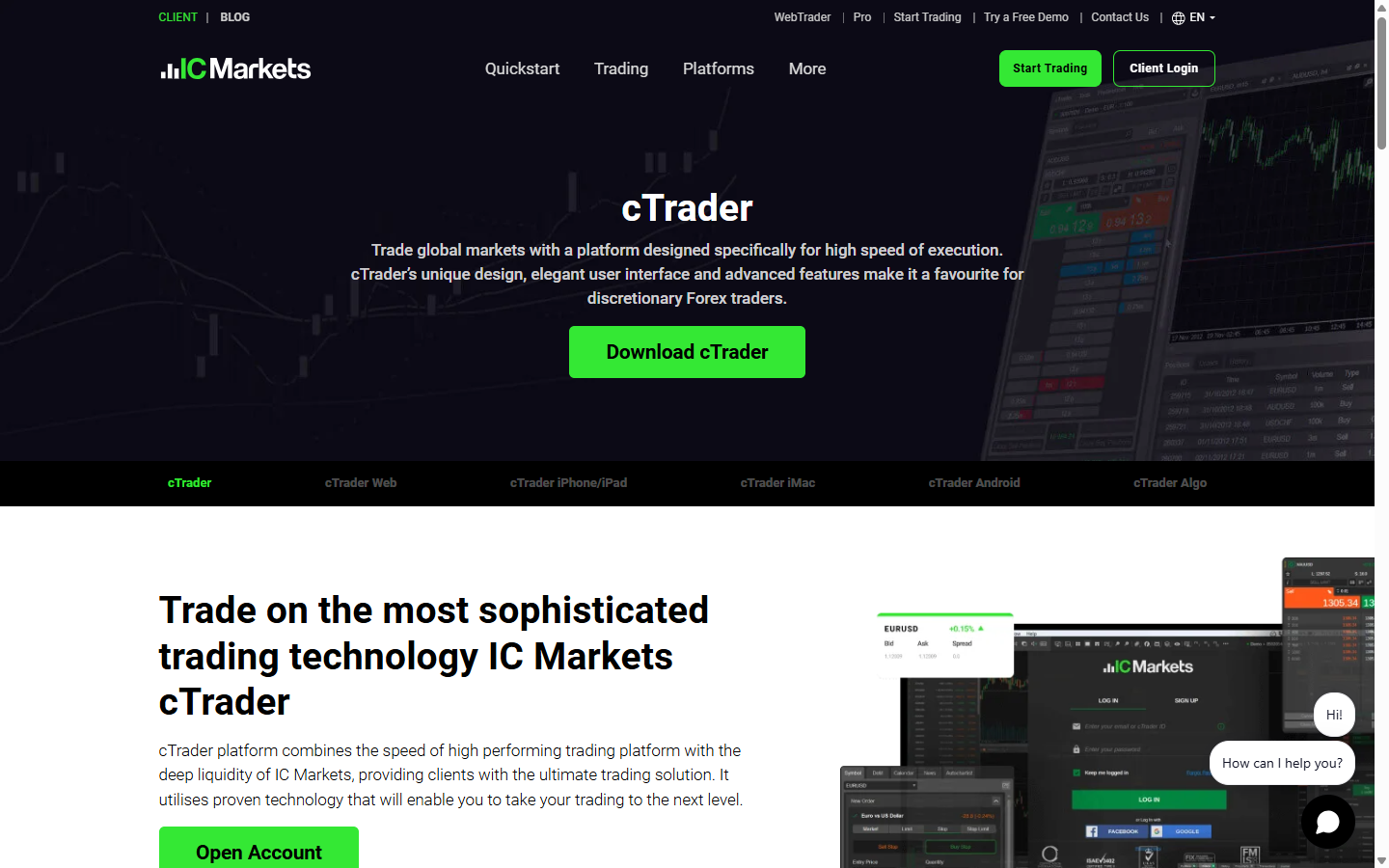
Most older Pepperstone-vs-IC-Markets reviews lean on a platform-differentiator that no longer exists. As of 2026, both brokers run native cTrader (each has its own subdomain — ct.pepperstone.com and ct.icmarkets.com — with dedicated desktop, web, iOS, and Android apps) and both ship direct TradingView execution. If you’re reading something published before mid-2025 that says one of them is “weaker on TradingView” or “missing cTrader”, that’s stale.
What hasn’t equalised: TradingView access on Pepperstone is gated to the Razor account — Standard accounts can’t trade through TradingView. IC Markets’ TradingView integration sits on its Raw Spread accounts only. Both behave the same way: commission tier gets the chart-platform integration; commission-free tier doesn’t.
AU funding flow — where Pepperstone quietly wins
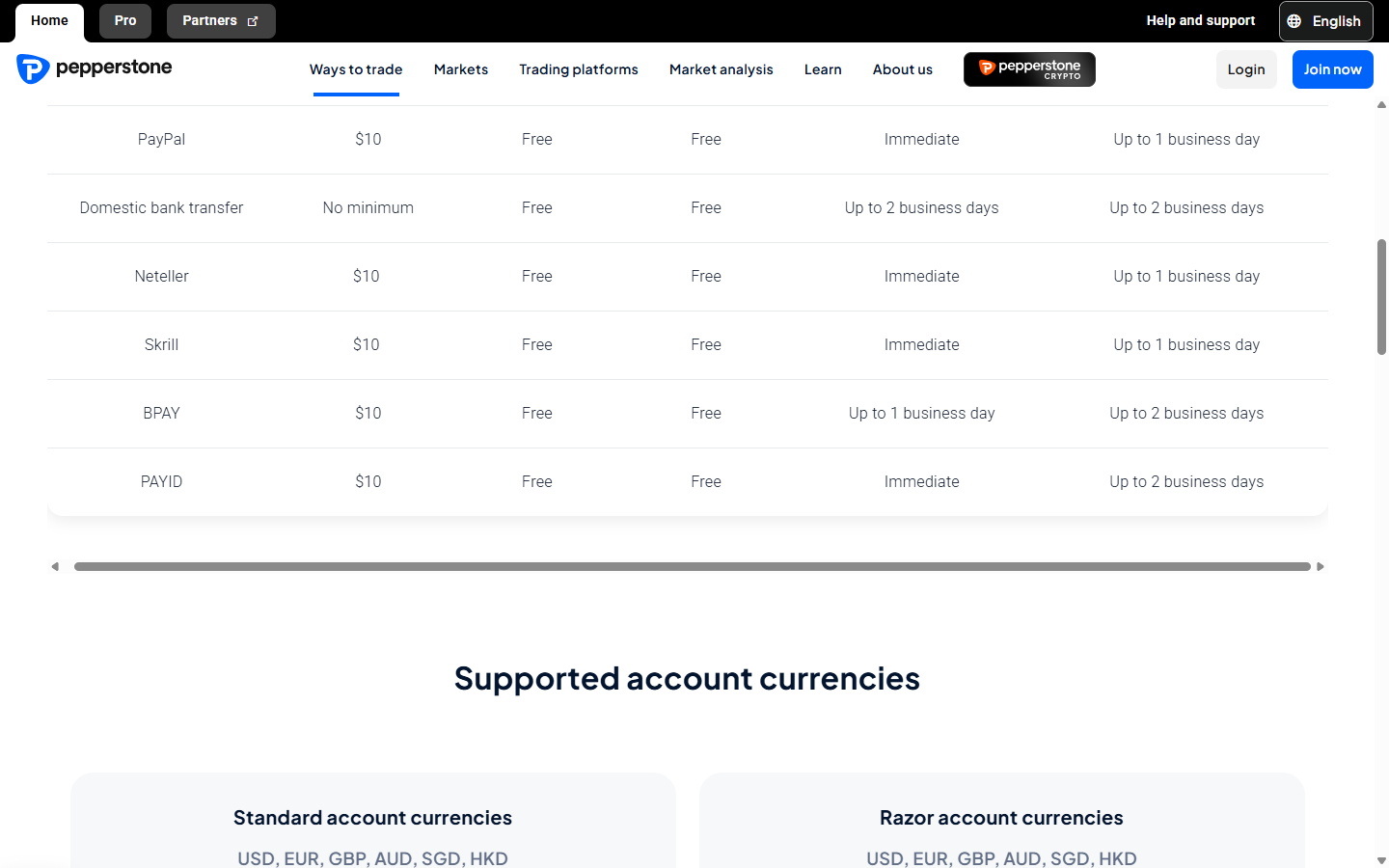
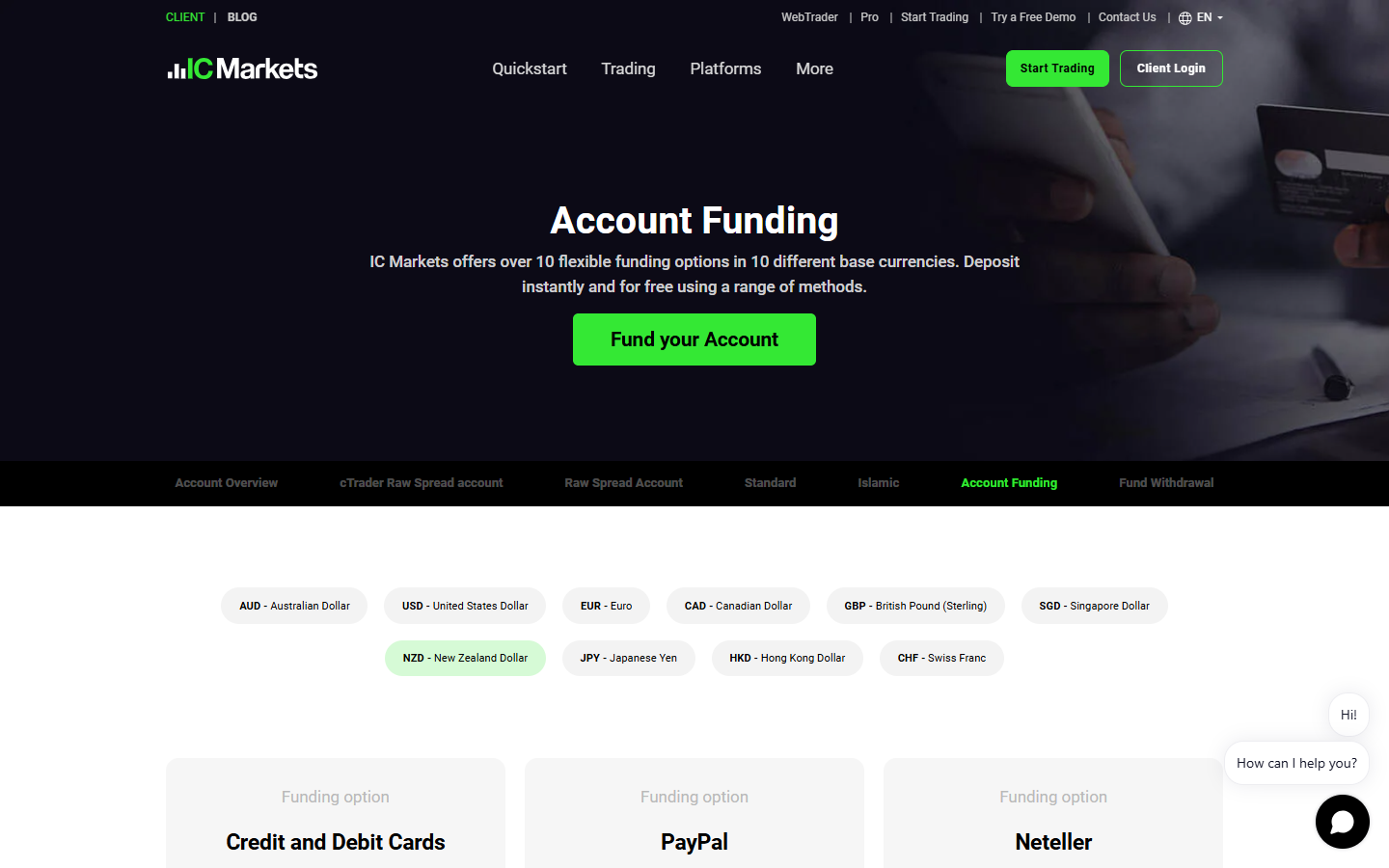
This is the dimension most generic comparison content gets wrong, and it’s the most consequential one for an AU-resident systematic trader who cycles capital across strategies. Pepperstone’s published AU funding methods include PayID — Australia’s near-instant inter-bank payment rail — with a $10 minimum, free deposits, free withdrawals, and immediate deposit processing.
IC Markets does not. We confirmed this both visually on the IC Markets AU funding page and via a full-text DOM scan: zero occurrences of “PayID” anywhere on the page. AU depositors are routed through BPAY (12–48 hour clearing window), wire transfer (2–5 business days), or e-wallets like Skrill / Neteller / PayPal / cards. For a trader topping up a margin account during a Sydney session and wanting it usable before London open, the BPAY window is real friction.
For a one-time deposit, this is noise. For a strategy that cycles AUD between a trading account and a sweep savings account weekly or monthly, it’s structural drag.
What we didn’t test (and why)
Two dimensions are missing from our scoring because they require something we’d rather flag honestly than fabricate: a live, logged-in MT5 server connection from an AU residential or AWS Sydney IP, captured during a high-impact news release window. That’s the only way to produce a meaningful round-trip latency comparison and to test third-party EA bridge stability under load.
Both brokers publish institutional infrastructure claims — NY4 and LD4 colocation, sub-50ms execution targets — and neither has documented widespread outages in the trailing 12 months. But “documented” and “what your EA actually sees during NFP from Sydney” are different things. We’ll publish those numbers in a follow-up.
Pricing in 2026
| Item | Pepperstone Razor | IC Markets Raw Spread |
|---|---|---|
| Minimum deposit (hard floor) | $0 AUD (broker recommends $200 AUD) | $200 USD (≈ $300 AUD) |
| Commission — MT4 / MT5 (round-trip per lot) | $7 AUD on AUD accounts | $7 USD |
| Commission — cTrader (round-trip per lot) | $6 USD | $6 USD |
| Commission — TradingView (round-trip per lot) | $7 USD | Check live page |
| Average spread on EURUSD (Razor / Raw, broker-published) | ~0.10 pip | ~0.10 pip |
| Inactivity fee | None on the AU entity | None on the Global / AU entity; EU entity charges after 6 months |
| AU funding methods | Card, PayPal, PayID, BPAY, Apple Pay, Google Pay, Skrill, Neteller, wire | Card, PayPal, BPAY, Skrill, Neteller, POLi, wire, broker-to-broker — no PayID |
| Cashback / rebate program | Volume-based, terms via account manager | Volume-based, published rebate tiers |
One nuance worth surfacing: Pepperstone’s hard floor is $0 AUD but the broker explicitly recommends $200. The practical minimum is whatever margin requirement your first trade demands — but for a starter exploring strategies on micro lots, $50 is enough to get going. IC Markets’ $200 USD is a hard floor regardless of strategy. For a trader allocating $300 AUD across three brokers to compare execution, that’s the difference between being able to test all three or only two.
Where each one shines
Pepperstone — five things in its column
- PayID funding — instant, fee-free, $10 minimum. The cleanest AU-resident funding experience among ASIC brokers.
- $0 hard minimum deposit — lowest barrier to entry of any ASIC raw-spread broker. Useful for testing strategies on small capital.
- Apple Pay and Google Pay live in 2026 — adds friction-free mobile top-up, with same-day usability.
- TradingView integration on Razor — direct execution from the chart platform a lot of systematic traders already live in.
- 30% gold spread reduction in 2026 — narrows what used to be a clear IC Markets advantage on XAUUSD.
Pepperstone — five things on the other side
- Smaller documented institutional liquidity pool than IC Markets — relevant only at higher volume tiers.
- TradingView gated to Razor — Standard accounts can’t trade through TradingView. (IC Markets does the same thing, but it’s still a gotcha for new Pepperstone signups.)
- Low-balance account archive policy — accounts under 10 units of currency are archived after 3 months of inactivity. Reversible via support, but an annoyance.
- USD-quoted commissions on cTrader and TradingView — AUD accounts pay an FX conversion drag on every trade.
- Standard account spreads are noticeably wider than the Razor + commission economics for any trader doing meaningful volume.
IC Markets — five things in its column
- Documented volume-based rebate tiers — at higher monthly volume the cashback adds back a meaningful chunk of commission.
- Larger institutional liquidity pool claims — NY4 data centre, deeper aggregated book on majors.
- Native cTrader with depth-of-market — the same product Pepperstone offers, but IC Markets’ marketing emphasises the DOM more.
- Direct TradingView execution shipped 2026 — IC Markets closed the gap on this dimension this year.
- Three account-type structure — Standard, MT Raw Spread, cTrader Raw Spread — gives a slightly cleaner separator between platform and pricing than Pepperstone’s two-account model.
IC Markets — five things on the other side
- No PayID — AU residents stuck with BPAY (12–48hr clearing) or wire (2–5 business days) for ACH-equivalent funding. The single largest gap in the head-to-head.
- $200 USD hard minimum — ≈ $300 AUD. Higher entry barrier than Pepperstone, and no flexibility on it.
- Fewer listed AU funding methods overall — the funding-methods page is shorter than Pepperstone’s, with no Apple Pay or Google Pay surfaced.
- EU entity charges inactivity fees after 6 months — the AU/Global entity doesn’t, but multi-jurisdiction account holders should check which entity they’re contracted under.
- Account-management UI feels dated relative to Pepperstone’s 2026 refresh — small thing, but a constant friction for traders who log in to the client area frequently.
Alternatives worth knowing about
If neither Pepperstone nor IC Markets fits, three other ASIC brokers are worth investigating before settling:
- FP Markets — ASIC-regulated, raw-spread model, similar institutional positioning to IC Markets. Stronger emphasis on equities-CFD coverage.
- Eightcap — newer AU broker building presence among the systematic / crypto-CFD audience. Smaller but more agile on platform features.
- Vantage — international broker with an AU entity, often quoted alongside the two in this review on third-party comparison sites.
As more broker-comparison reviews ship here, the Luna3 Reviews hub will accumulate the head-to-head matrix across all of them. This is the first; subsequent reviews will link back.
Bottom line
Both Pepperstone and IC Markets are credible, long-tenured, ASIC-regulated brokers, and the platform-feature gap that older reviews obsess over has largely closed in 2026. The actual decision now turns on two things: how you fund the account and how big the account is.
If we had to pick one tomorrow for a fresh AU systematic account starting under $500 AUD, we’d open with Pepperstone — for the PayID funding flow, the $0 hard minimum, and the TradingView-on-Razor integration that makes chart-to-execution a single window. For an established trader running >$50k AUD across multiple EAs who values published rebate tiers and isn’t sensitive to BPAY timing, IC Markets is the closer fit.
The standard risk disclosure for leveraged products applies. Both brokers offer demo accounts. Use them. The day a real strategy goes live is too late to discover that the funding flow or the latency don’t fit.
Get early access to Orbit
Orbit is Luna3.ai’s AI-augmented research engine. 12 algorithmic signals + a gradient-boosted ML model + an agentic LLM that reads each top pick’s filings and writes a daily thesis with conviction score and catalyst proximity. Three regimes, three playbooks — growth in expansion, defensives in late-cycle, recovery plays at panic bottoms. The 3 in Luna3.ai.
No spam. Unsubscribe any time.
No comments yet. Be the first to share your thoughts!